12. Microbial pterins as potential indicators of organic carbon dynamics in estuarine and coastal sediments
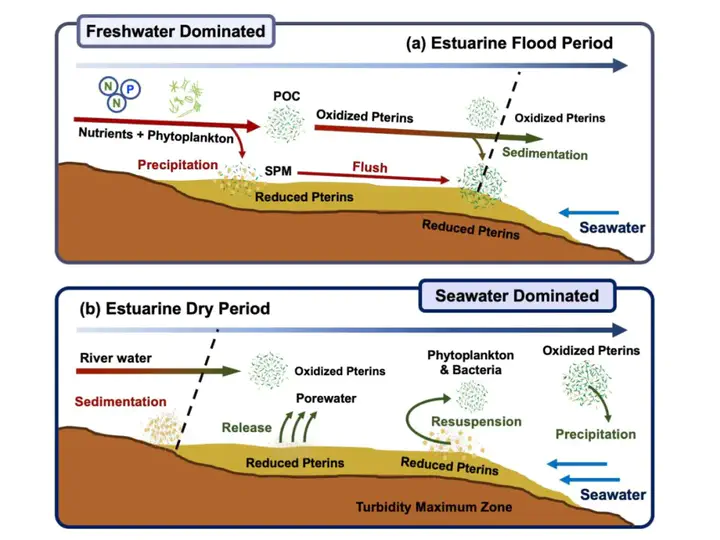 Graph Abstract
Abstract
Pterins serve as precursors, pigments, and enzymatic cofactors in microbes, contributing to global nutrient cycles and unconventional carbon and nitrogen utilization. This study investigated the biogeochemical characteristics of microbial pterins in the Jiulong River Estuary and Xiamen Bay, focusing on their spatiotemporal distribution in estuarine wetlands during dry and flood seasons. However, the ecological significance of pterins as biomarkers for carbon accumulation and degradability in estuarine sediments remains underexplored, limiting their application in monitoring coastal carbon sinks and algal bloom dynamics. By analyzing correlations between environmental factors and biological indices, we provide novel insights into estuarine ecological processes. Our results indicate that during the flood season, phytoplankton, including freshwater algae and cyanobacteria, are the primary sources of microbial pterins, driven by high productivity from upstream inputs. In the dry season and under reducing sediment conditions, heterotrophic contributions to microbial pterins become more prominent. Dihydro-neopterin and neopterin dominate in reducing sediments, while biopterin and its metabolite isoxanthopterin are more prevalent in the water column. The strong correlation between chlorophyll a and pterins suggests that microbial pterins co-vary with phytoplankton biomass and may serve as indicators of marine algal blooms. Increased pterin levels signal bloom initiation, while their rapid consumption marks bloom progression. Additionally, sediment C/N ratio and isoxanthopterin levels hint at the potential use of pterins as biomarkers for revealing coastal carbon dynamics. These findings highlight the need for further research on the role of pterins in carbon cycling and their application in monitoring marine ecosystems.